


Unlock the Power of Nature and Grow Your Green Wisdom
Here you will find a selection of plants featured in our Home Herbal Pharmacy program and the accompanying Manual with recipes for herbal remedies.
Learn even more about these and many other plants through our Manual and E-platform.
In this section you can also explore our guide to mindful, sustainable harvesting and discover practical tips to help you embrace a greener way of living.

LEMON BALM
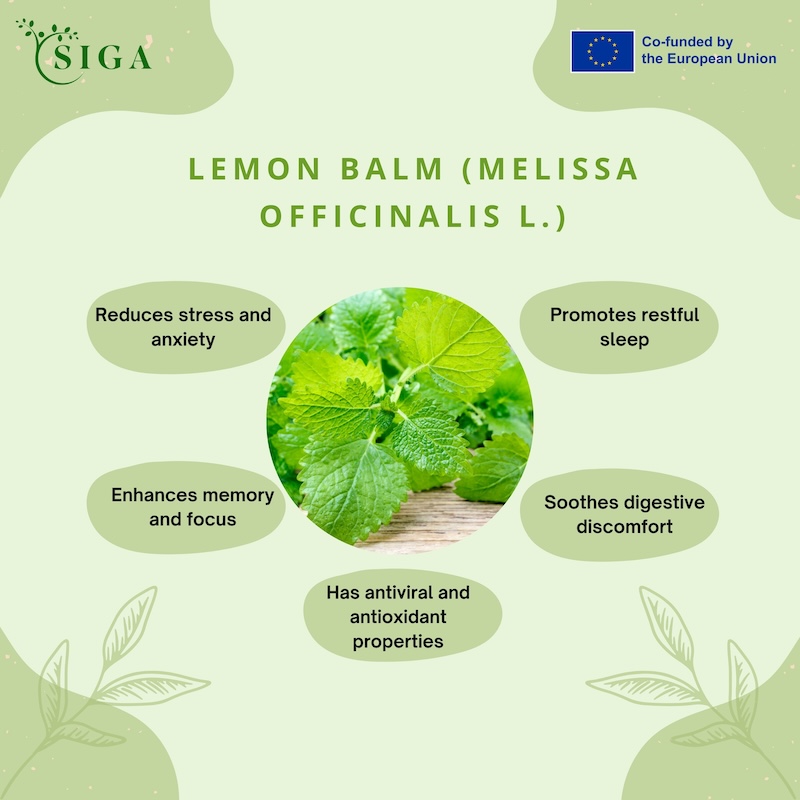
Lemon Balm (Melissa officinalis L.) is a perennial, herbaceous plant from the mint family (Lamiaceae), originally native to the Mediterranean basin and Western Asia. It grows in dense clumps, typically 30–80 cm tall. It produces small, white or pale pink lipped flowers that bloom from mid-summer to early autumn and are highly attractive to bees and pollinators. The plant thrives in well-drained soil and requires regular watering.
The ideal time to harvest the leaves is in the morning, just before the plant flowers in late spring or early summer, as this is when the aromatic oils are most concentrated.
Lemon Balm is rich in volatile oils (including citronellal and citral), flavonoids, and phenolic compounds like rosmarinic acid, making it a valuable herb for health. It is renowned for its calming and nervine properties, effectively reducing anxiety, stress, and promoting restful sleep. It supports digestive health by alleviating spasms, bloating, and indigestion, and its antiviral properties, particularly against herpes simplex, are well-documented. Additionally, its antioxidant and anti-inflammatory compounds help boost cognitive function and mood, and it may provide relief from tension headaches.
NETTLE
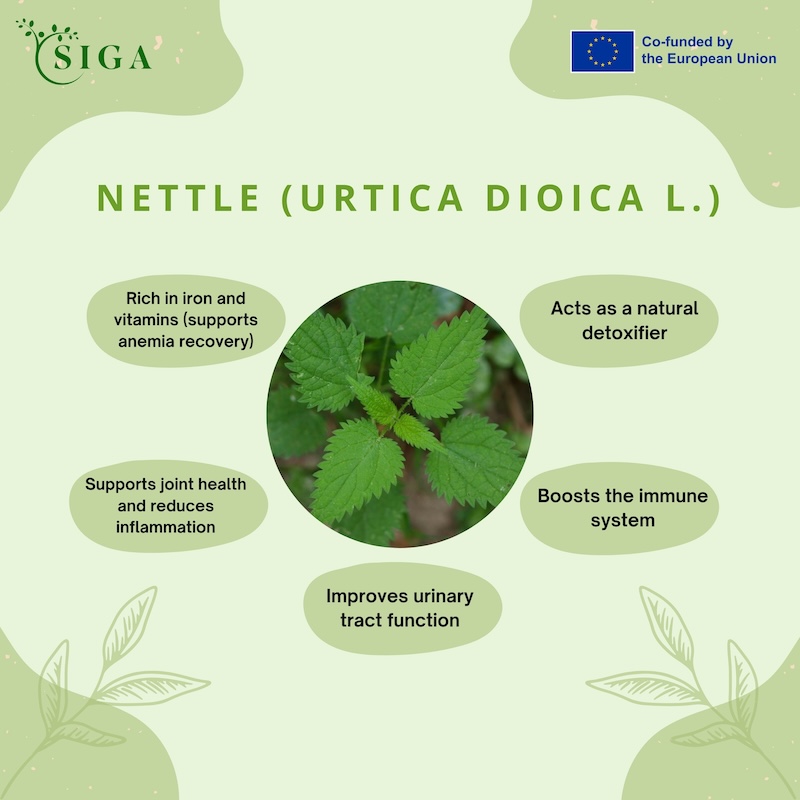
Nettle, or stinging nettle, is a herbaceous perennial plant from the Urticaceae family, native to Europe, temperate Asia, and North Africa. It typically grows between 0.9 and 2 meters tall and spreads through rhizomes and stolons. The plant has soft, green, serrated leaves covered in stinging hairs called trichomes, which cause a burning sensation when touched. Nettle is dioecious, meaning male and female flowers grow on separate plants, and it blooms from late spring to early summer.
It thrives in rich, moist soil and is commonly found in meadows, riverbanks, forest edges, and disturbed areas. The best time to harvest nettle is in early spring before flowering, when the leaves are most tender and nutritious. Protective clothing and gloves are essential during harvesting to avoid stings. Only the top few inches of young plants should be cut for the best quality.
Nettle is rich in vitamins A, C, K, and B-complex, as well as minerals like calcium, iron, and magnesium. It also contains essential fatty acids, amino acids, and antioxidants. Medicinally, nettle is known for its anti-inflammatory properties, helping with joint pain and arthritis. It can relieve allergy symptoms due to its natural antihistamine effects. Nettle root is used to treat benign prostatic hyperplasia (BPH) and improve urinary health. Some studies suggest it may help regulate blood sugar levels and protect against chronic diseases.
SAGE
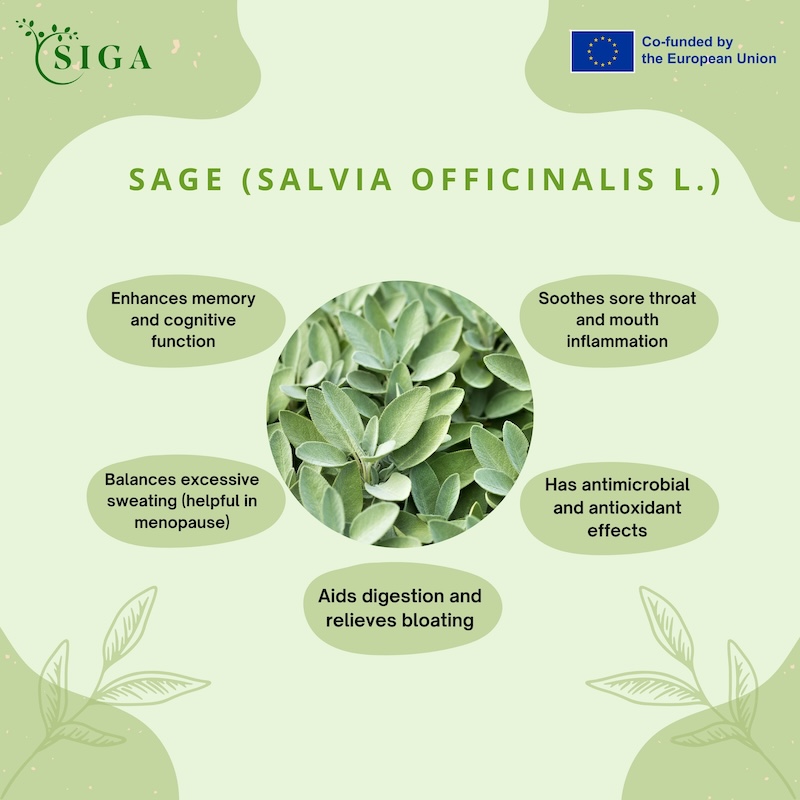
Sage (Salvia officinalis L.) is an evergreen perennial subshrub from the Lamiaceae family, native to the Mediterranean region but now cultivated worldwide. It typically grows 30 to 70 centimeters tall and forms woody stems at the base. The plant has oblong to lance-shaped, gray-green leaves covered with fine hairs that give them a soft, velvety texture and a strong aromatic scent. Sage produces two-lipped flowers in shades of purple, blue, or white, blooming from late spring to early summer.
It prefers well-drained, sandy or loamy soils and thrives in sunny locations with moderate watering, making it well-suited to Mediterranean-type climates. Sage is commonly grown in gardens, herb beds, and containers, both for its culinary and medicinal uses. The leaves can be harvested throughout the growing season, with the best flavor obtained just before flowering.
Sage leaves are rich in essential oils, flavonoids, and phenolic compounds such as rosmarinic acid and carnosic acid, which contribute to their distinctive aroma and health-promoting properties. They also provide vitamins A, C, and K, along with minerals such as calcium, magnesium, and potassium. Medicinally, sage has long been valued for its antimicrobial, antioxidant, and anti-inflammatory effects. It has been traditionally used to soothe sore throats, support digestion, and reduce excessive sweating.
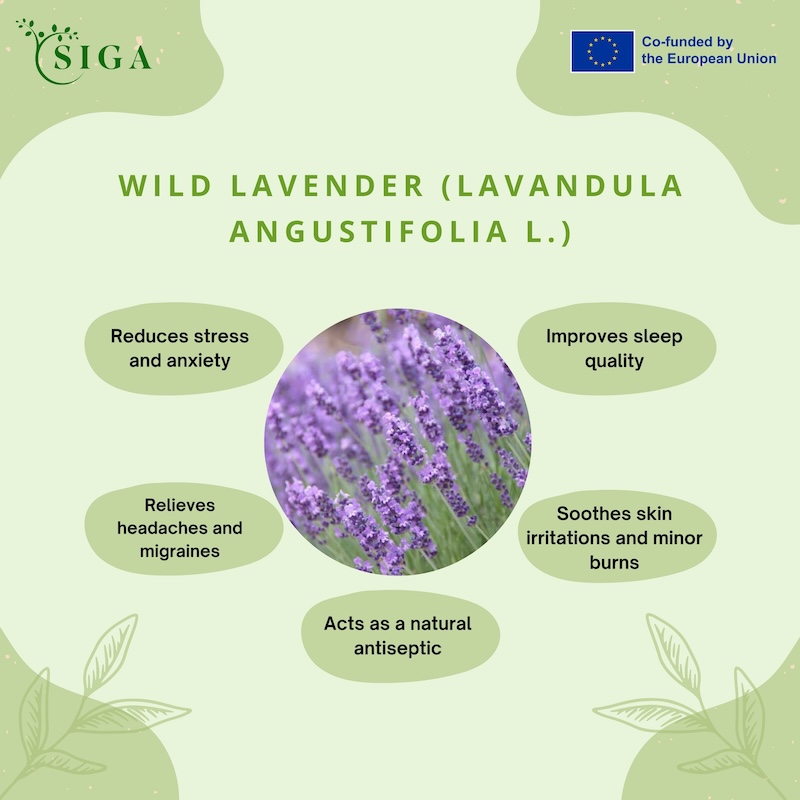
WILD LAVENDER
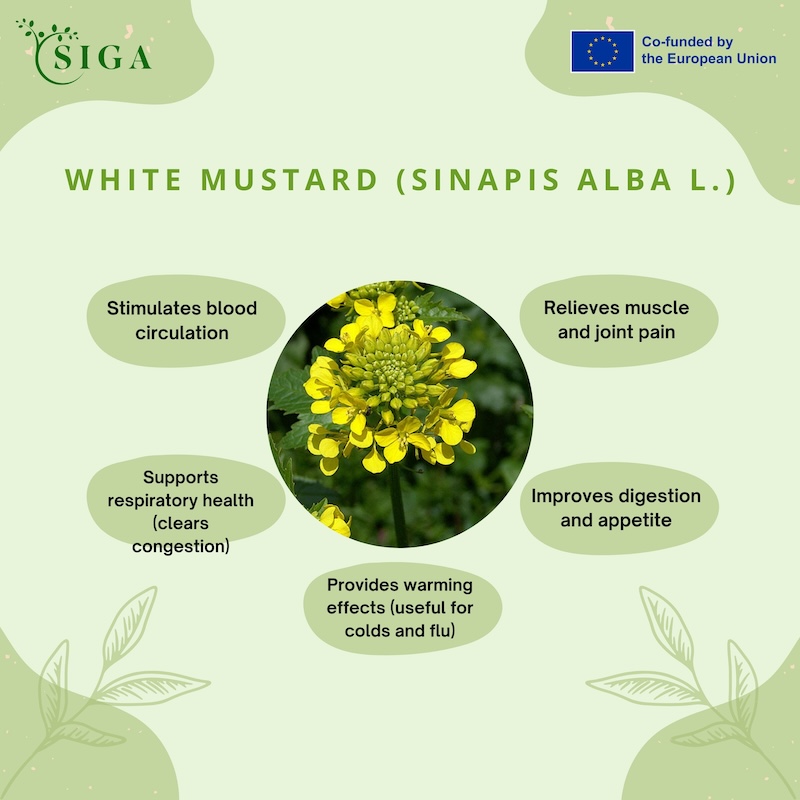
WHITE MUSTARD
White mustard (Sinapis alba L.) is an annual plant from the Brassicaceae family, native to the Mediterranean region but now cultivated widely in Europe, Asia, and North America. It typically grows 30 to 80 centimeters tall with erect, branching stems. The leaves are rough, lobed, and bright green, while the plant produces small, yellow, four-petaled flowers that bloom from late spring to early summer.
It thrives in well-drained, moderately fertile soils and grows best in sunny, open areas. White mustard is often cultivated as a cover crop because it suppresses weeds, improves soil structure, and prevents erosion. It grows quickly and is usually harvested for seeds in mid to late summer, once the pods turn brown and dry.
The seeds are rich in glucosinolates, which give mustard its pungent flavor, as well as proteins, fiber, and essential fatty acids. They are commonly ground into mustard flour and used in food processing, condiments, and pickling. Mustard poultices, made from crushed seeds, were traditionally applied to relieve muscle pain, chest congestion, and joint inflammation. Today, mustard seeds remain valued for their culinary versatility and their role in sustainable agriculture.
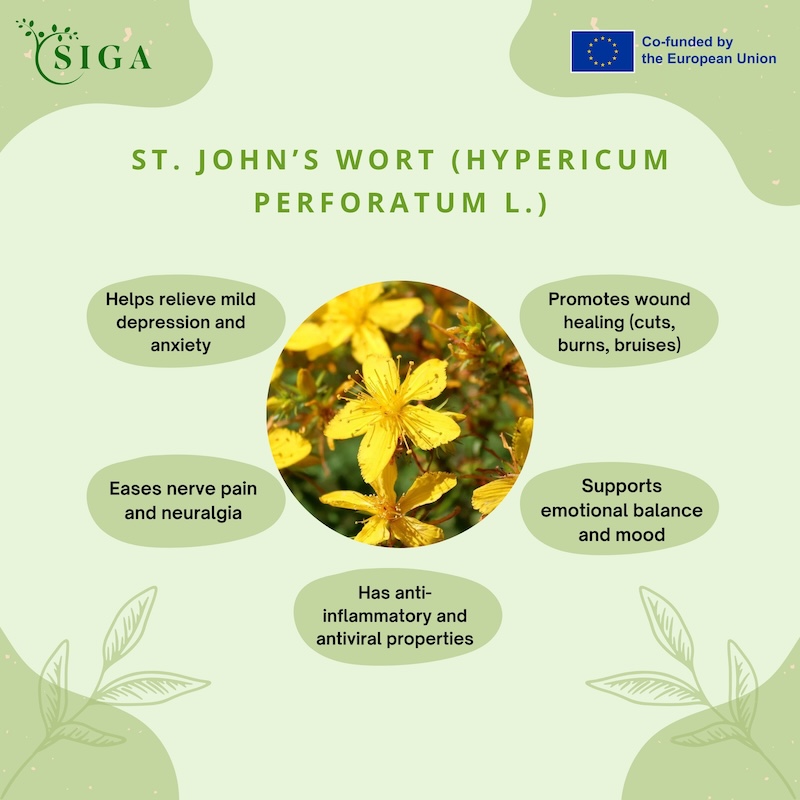
ST. JOHN'S WORT
St. John’s wort (Hypericum perforatum L.) is a perennial herb from the Hypericaceae family, native to Europe, North Africa, and Western Asia, and now naturalized in many parts of the world. It typically grows 30 to 90 centimeters tall with erect, branching stems. The plant has small, oblong leaves dotted with translucent oil glands that appear as tiny perforations when held against the light. From late spring to midsummer, it produces clusters of bright yellow, five-petaled flowers with numerous stamens.
It thrives in dry, well-drained soils and is commonly found in meadows, fields, roadsides, and forest edges. Harvesting usually takes place when the flowers are in full bloom, as this is when the concentration of active compounds is highest. The aerial parts of the plant—flowers and leaves—are dried for teas, tinctures, and extracts.
St. John’s wort contains hypericin, hyperforin, and flavonoids, which contribute to its medicinal effects. Traditionally, it has been used to treat wounds, burns, and nerve pain. Today, it is best known as a natural remedy for mild to moderate depression, anxiety, and sleep disturbances.
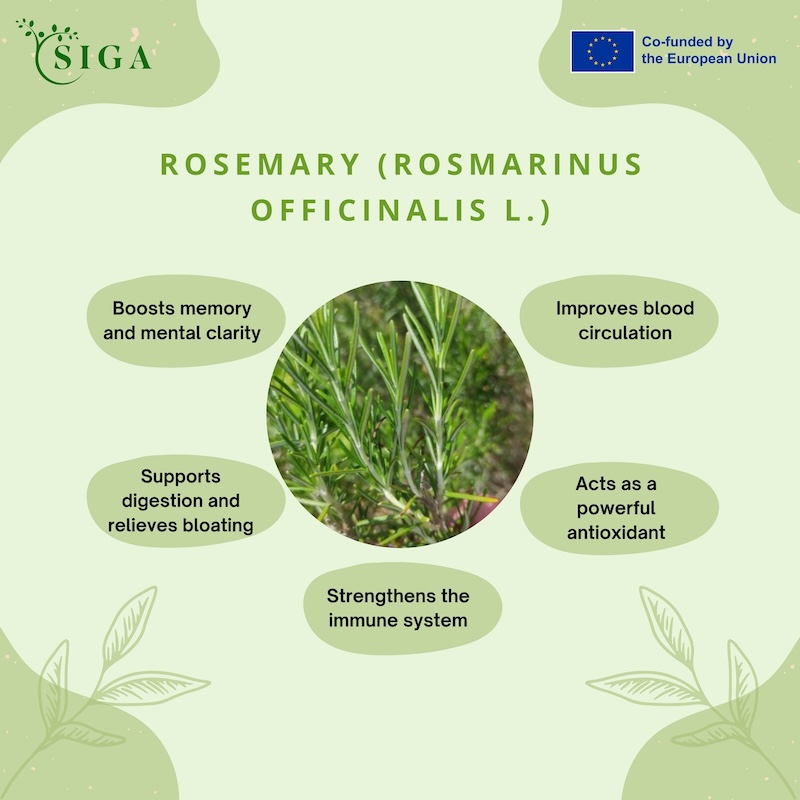
ROSEMARY
Rosemary (Salvia rosmarinus Spenn.) is a woody, perennial shrub from the mint family, originally native to the Mediterranean region. It grows as an upright bush, typically 1–1.5 meters tall, with fragrant, needle-like leaves and small blue, pink, or white flowers. These flowers bloom from spring to summer and attract pollinators like bees. Rosemary thrives in well-drained, sandy soil, prefers full sun, and tolerates both drought and salt spray. It requires minimal maintenance and should be pruned after flowering to prevent woodiness.
Propagation is best done through cuttings. The ideal time to harvest rosemary is in late spring, just before flowering, when the oils are most potent. Harvesting should be done with sharp shears, cutting stems without stripping the plant entirely. No more than one-third of the plant should be cut at a time to maintain its health. For drying, sprigs can be bundled and hung in a dark, dry, ventilated space for one to two weeks.
Rosemary is rich in essential oils and antioxidants, making it a valuable herb for health. It supports cognitive function by improving memory and concentration, and has strong anti-inflammatory and antimicrobial properties due to compounds like camphor and rosmarinic acid. Rosemary boosts the immune system and protects against cellular damage. It aids digestion by relieving bloating and gas. Its circulatory and anti-inflammatory properties also benefit muscle and joint health.
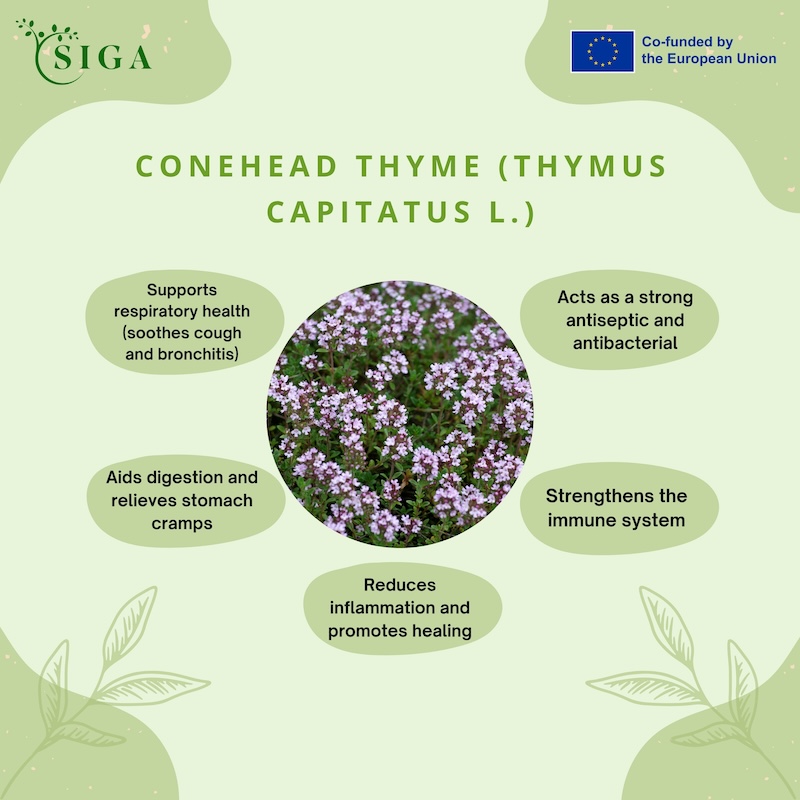
COMMON THYME
Common thyme (Thymbra capitata (L.) Cav.) is a woody, perennial herb from the mint family, originally native to the Mediterranean. It grows as a low shrub, typically 15–30 cm tall, with aromatic gray-green leaves and small purple, pink, or white flowers. These flowers bloom from late spring to early summer and attract pollinators like bees. Thyme thrives in well-drained, sandy or rocky soil, prefers full sun, and tolerates both drought and frost. It requires minimal maintenance and should be trimmed in spring and summer to prevent woodiness.
The ideal time to harvest thyme is in mid-spring or early summer, just before flowering, when the leaves are most flavorful. Harvesting should be done with sharp tools, cutting above leaf nodes to encourage regrowth. No more than one-third of the plant should be cut at a time to maintain its health. For drying, stems can be bundled and hung in a dark, dry, ventilated space for two weeks.
Thyme is rich in essential oils, vitamins, and minerals. It supports respiratory health by reducing inflammation and mucus, and has strong antibacterial and antifungal properties due to thymol. Thyme boosts the immune system with its high vitamin A and C content, and also contains copper, iron, and manganese. It aids digestion by reducing bloating and gas. Its anti-inflammatory and antibacterial properties also benefit skin health, helping treat acne and infections.
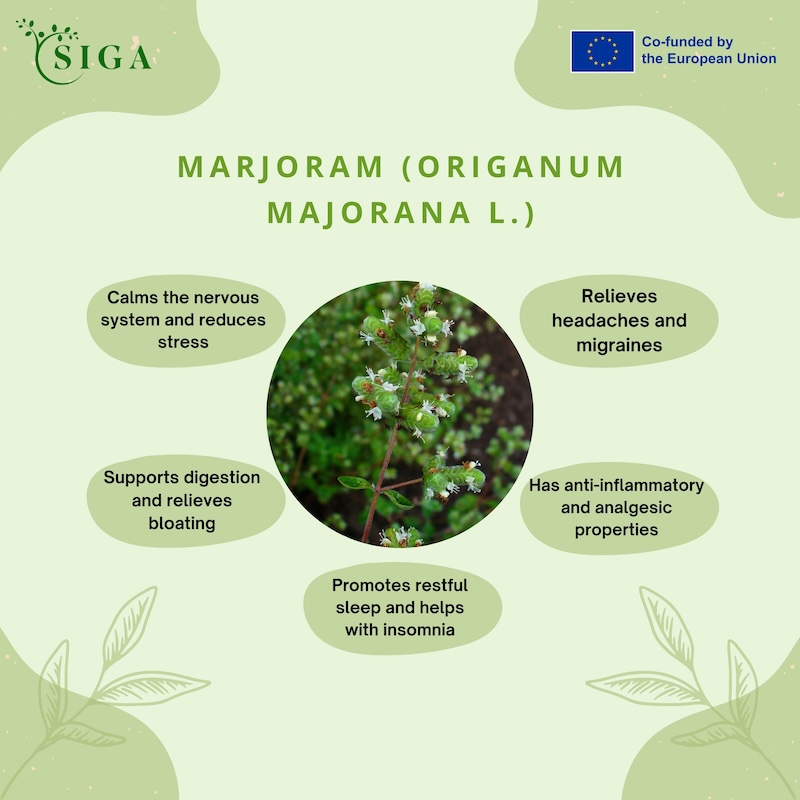
MARJORAM
Marjoram (Origanum majorana L.) is a perennial herb from the Lamiaceae family, native to the Mediterranean and Western Asia but widely cultivated as a culinary and medicinal plant. It typically grows 30 to 60 centimeters tall, forming bushy clumps with square stems. The leaves are small, oval, gray-green, and softly hairy, releasing a sweet, aromatic fragrance. In summer, marjoram produces clusters of tiny white to pink flowers.
It thrives in warm, sunny locations with well-drained, sandy or loamy soils, and is often grown in herb gardens, pots, and borders. In colder climates, marjoram is usually treated as an annual. The leaves are harvested throughout the growing season, with peak flavor just before flowering. Regular trimming encourages compact growth and prolongs the harvest period.
Marjoram contains essential oils rich in compounds such as carvacrol, thymol, and terpinene, as well as flavonoids and phenolic acids. Traditionally, it has been used to soothe digestive discomfort, relieve coughs, and calm nerves. Modern herbal medicine values it for its mild antispasmodic and antimicrobial properties. In the kitchen, marjoram is a popular seasoning for soups, stews, meats, and vegetable dishes.
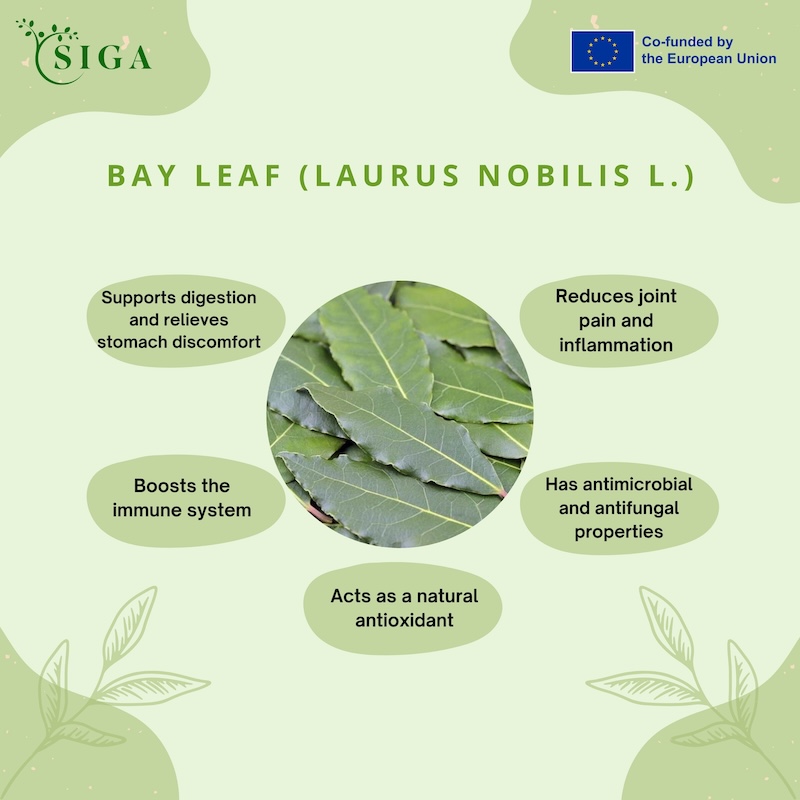
BAY LEAF
Bay Leaf (Laurus nobilis) is an evergreen tree or large shrub belonging to the laurel family, native to the Mediterranean region. It typically grows 2–10 meters tall, with smooth, leathery, dark green leaves that release a distinct aromatic scent when crushed. Small yellow-green flowers bloom in spring, followed by dark purple to black berries on female plants. Bay prefers well-drained, fertile soil, thrives in full sun to partial shade, and tolerates pruning well, which helps maintain its shape as a hedge or potted plant.
Propagation is usually done through seeds, cuttings, or layering. Harvesting is best carried out during the warmer months when the leaves are mature and their essential oil concentration is highest. Drying should be done in a cool, dark, and well-ventilated area for one to two weeks.
Bay leaves are rich in essential oils such as cineole and eugenol, giving them both culinary and medicinal value. They are widely used to flavor soups, stews and sauces. Medicinally, bay leaves support digestion by reducing gas and bloating, and they possess antimicrobial, antioxidant, and anti-inflammatory properties. Traditionally, they have been used to soothe respiratory issues, regulate blood sugar, and improve circulation. The oil extracted from bay leaves has also been applied topically for joint and muscle relief.
 English (United Kingdom)