


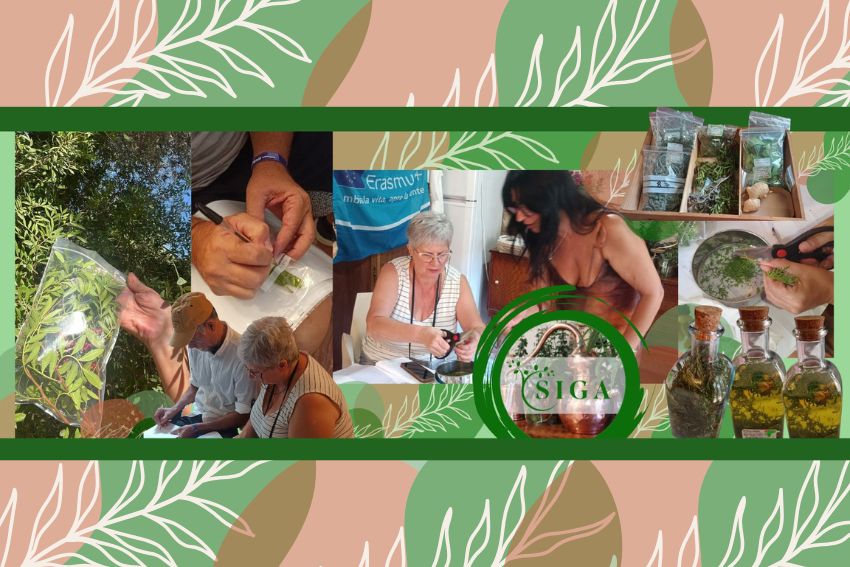
In September 2024, the SIGA project conducted a pilot program in Palma, blending environmental education, traditional herbal knowledge, and hands-on experience with medicinal plants. This initiative offered participants a deep dive into the local flora, emphasizing sustainability, health, and nature-based learning.
The program began with a theoretical study of the medicinal properties of local plants. Participants explored the historical and modern uses of various herbs, learning how these plants contribute to health and well-being. Experts guided discussions on plant identification, ethical foraging practices, and sustainable harvesting methods.
The learning process extended beyond the classroom into the natural landscapes of Palma. Participants embarked on guided treks through the mountains and along the coastline, collecting wild herbs in their natural habitats. These immersive experiences helped deepen their understanding of plant ecology while fostering a strong connection with nature.
After gathering the plants, the participants engaged in practical workshops to transform their harvests into a variety of natural products. They experimented with traditional methods to create:
- Syrups – Concentrated herbal extracts used for medicinal and culinary purposes.
- Essential Oils – Aromatic extractions harnessing the therapeutic properties of plants.
- Infusions – Herbal teas with soothing and medicinal benefits.
- Tinctures – Alcohol-based plant extracts preserving active compounds for longer use.
Each hands-on session combined scientific knowledge with traditional wisdom, allowing participants to develop valuable skills in herbal preparation.
Transformative Impact: A Journey of Discovery
Beyond learning new skills, the pilot program had a profound impact on the participants. Many described it as an eye-opening experience, reconnecting them with nature in a meaningful way. They gained confidence in identifying and using wild plants, fostering a sense of self-sufficiency and respect for traditional herbal knowledge.
The program also strengthened a sense of community, as participants worked together, shared stories, and exchanged insights. For some, it sparked a newfound interest in herbal medicine and sustainable living, inspiring them to continue exploring plant-based remedies in their daily lives. Others found the experience deeply therapeutic, enjoying the mindful process of harvesting and creating natural products while immersing themselves in nature’s rhythm.
By combining nature-based activities with practical workshops, the SIGA pilot program demonstrated the value of traditional herbal knowledge in modern times. Participants not only gained skills in plant-based health care but also developed a deeper respect for biodiversity and sustainable practices.
This successful pilot marks an important step in integrating herbal education into lifelong learning programs, empowering individuals to reconnect with nature while preserving valuable botanical traditions.
 Greek (el-GR)